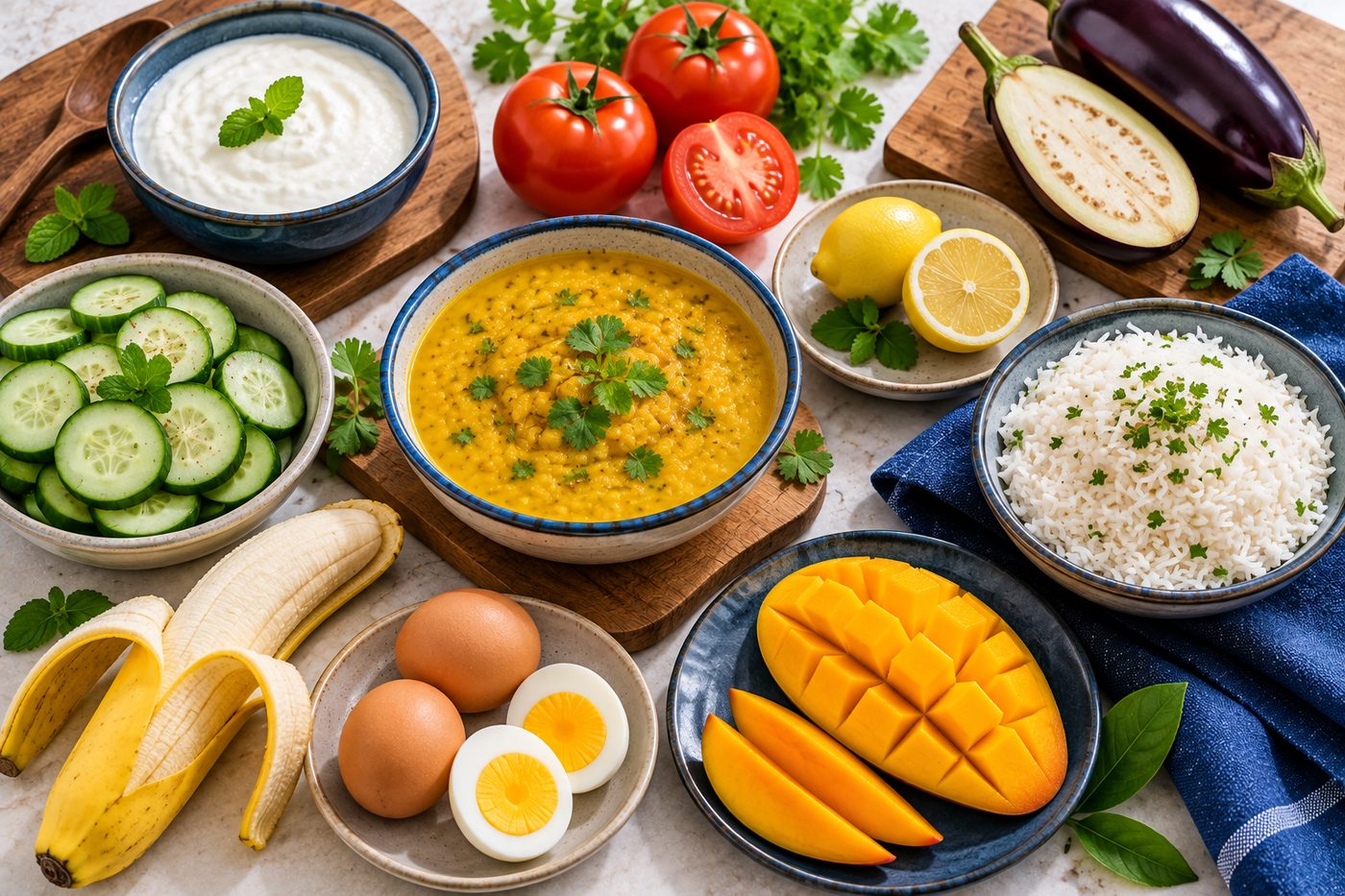

No diet cures inflammatory arthritis, and no diet replaces medicine. But what you eat does affect inflammation, weight, uric acid and how well you tolerate treatment — so it's worth getting right. These guides are written for the food actually on Indian tables, and they follow the evidence rather than tradition or fashion. Discuss any big change with your rheumatologist, especially if you have diabetes, kidney disease or are on steroids.
Fourteen kitchen rules you've probably been given — and what's actually true
Every family has its list. Most of these come from older theories of "hot," "cold," "sour" and "heavy" foods, passed down with love. They are not supported by evidence, and following them often takes away exactly the foods that help — protein, dairy, fruit. Here they are, one by one.
There is no evidence that curd worsens any form of arthritis. In gout, dairy actually lowers uric acid and protects against attacks. Curd is a good source of protein and calcium — especially valuable on steroids. Eat it.
No. "Sour" is a taste, not a cause of inflammation. Citrus fruit and amla are rich in vitamin C, which if anything is mildly helpful. Tomatoes are fine. The idea comes from traditional humoral theories, not from evidence.
Rice does not cause or worsen arthritis. Both rice and roti are fine; portion size matters more than which grain. Whole grains and millets (bajra, jowar, ragi) add fibre, but white rice in sensible amounts is not harmful.
Studies have found no link between nightshade vegetables and arthritis flares. A few individuals report sensitivity, but there is no reason for everyone to avoid them. If you don't notice a problem, eat them.
Foods don't have a temperature effect on your immune system. Joint stiffness is worse in cold weather because of the cold, not because of what you ate. Keep warm; eat normally.
Plant purines do not raise gout risk. Large studies show legumes are safe. Removing dal from a vegetarian gout patient's diet takes away their main protein for no benefit. Eat your dal.
Not required. Chicken and most fish are fine for all types of arthritis, and fish provides useful omega-3. In gout, the foods to limit are organ meats, red meat and shellfish — not all non-veg.
Milk and curd supply calcium and protein, which help bones — good. Ghee is a fat: a small amount is fine, but it does not "lubricate" joints, and excess adds weight, which harms them. Moderation, not medicine.
Fruit does not worsen arthritis. Whole fruit — including mango in season — is fine. The real problem is added sugar and sugary drinks, which drive inflammation and raise uric acid. Eat the fruit, skip the cold drink.
Fasting can briefly reduce symptoms, but the effect reverses on eating, muscle is lost, and fasting can trigger gout attacks and cause problems with medicines like methotrexate. It is not a treatment.
Eggs are low in purines and a good, inexpensive protein. No form of arthritis requires avoiding them.
Chilli and spices do not inflame joints. Some, like turmeric and ginger, are mildly anti-inflammatory. Spice level is a matter of your stomach's comfort, not your joints.
Neither changes blood uric acid meaningfully — the body tightly controls blood pH regardless of what you drink. Plain water in good quantity helps the kidneys; the alkaline part is marketing.
A well-planned vegetarian diet is excellent for arthritis; so is a balanced diet that includes fish and poultry. What matters is the overall pattern — vegetables, legumes, whole grains, less sugar and processed food — not moral purity.
Confused by conflicting food advice?
Bring your questions — food is part of every consultation. Walk-in, no appointment.
Clinic timings & location