
No diet cures inflammatory arthritis, and no diet replaces medicine. But what you eat does affect inflammation, weight, uric acid and how well you tolerate treatment — so it's worth getting right. These guides are written for the food actually on Indian tables, and they follow the evidence rather than tradition or fashion. Discuss any big change with your rheumatologist, especially if you have diabetes, kidney disease or are on steroids.
How to read this page
Supplements sit in an awkward place: heavily marketed, lightly regulated, and mostly studied in small or poor-quality trials. Below is what the better evidence actually shows — graded honestly as useful, modest, or no good evidence. The one firm rule: tell your rheumatologist everything you take, including herbal and Ayurvedic preparations. Some interact with medicines; some contain things they shouldn't.
Turmeric (haldi) and curcumin
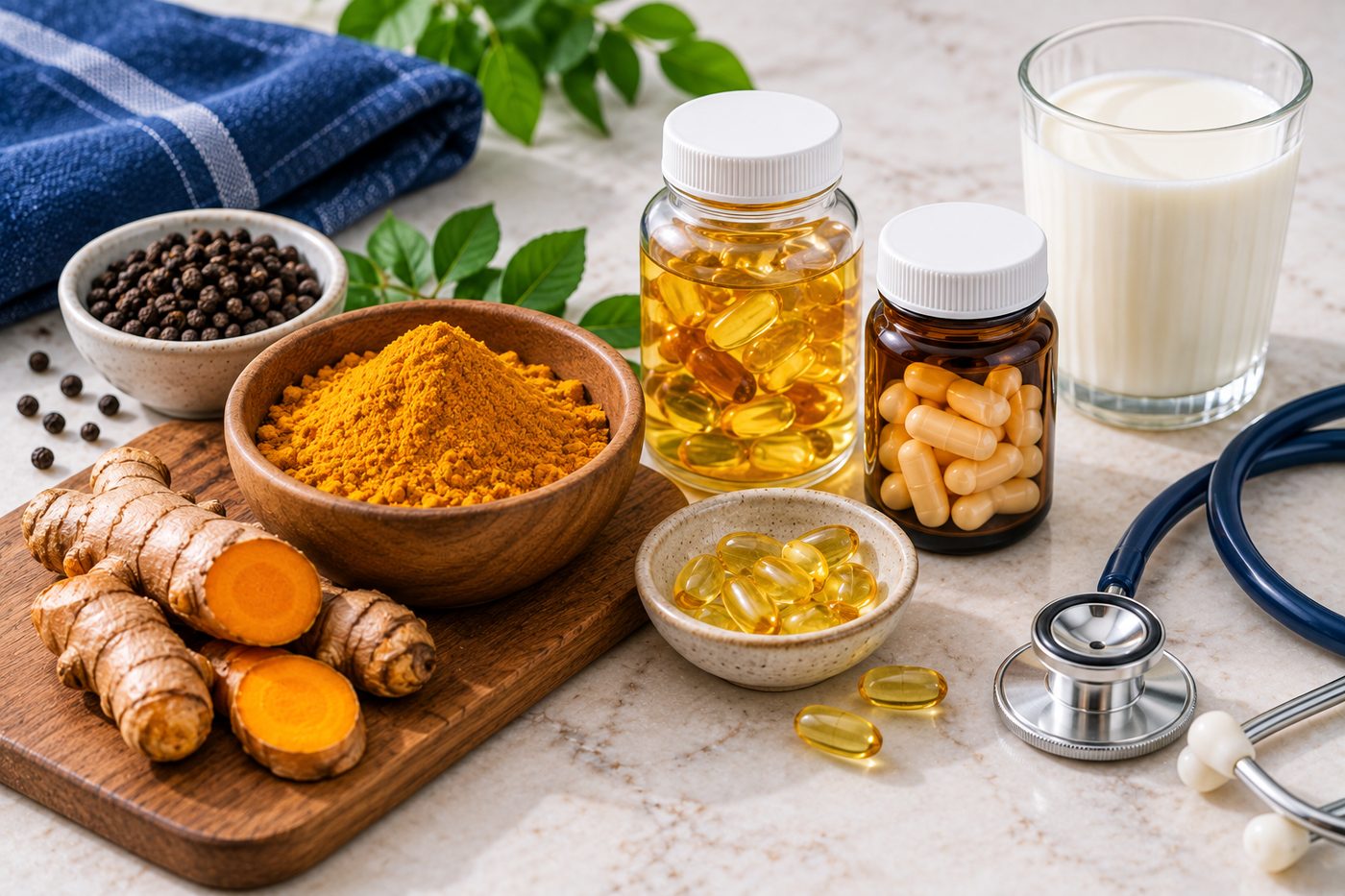
Turmeric contains curcumin, which has genuine anti-inflammatory activity in the laboratory. In people, trials of curcumin supplements in osteoarthritis and rheumatoid arthritis show modest reductions in pain — roughly comparable to a mild painkiller, and far less than disease-modifying medicine. Two honest caveats: curcumin is poorly absorbed (hence formulations with piperine/black pepper or fat), and haldi-doodh delivers very little of it. As a food, turmeric is excellent; as a cure for arthritis, it is not. It can also increase bleeding tendency with blood thinners.
Supplements with real evidence
| Supplement | Evidence | Verdict |
|---|---|---|
| Vitamin D | Deficiency is very common in India and worsens bone and muscle health. Replacing it when low is clearly beneficial; taking large doses when levels are normal is not. | Useful — if deficient (get tested) |
| Calcium | Essential for bone protection on steroids and in osteoporosis; best from diet (dairy, ragi, sesame), supplemented when intake is low. | Useful — especially on steroids |
| Omega-3 (fish oil) | Several trials show modest reductions in joint pain and stiffness in rheumatoid arthritis at good doses (2–3 g/day). Flax and walnuts give a weaker plant form. | Modest — reasonable in RA |
| Folic acid | Not optional if you take methotrexate — reduces side effects. | Useful — prescribed with methotrexate |
| Vitamin B12 | Deficiency is common in vegetarians and causes fatigue and nerve symptoms that mimic disease. Worth checking. | Useful — if deficient |
Supplements with weak or no evidence
| Supplement | What the evidence shows |
|---|---|
| Glucosamine and chondroitin | At best a small benefit in knee osteoarthritis; no role in rheumatoid or other inflammatory arthritis. Harmless but often a waste of money. |
| Collagen powders | Weak, industry-funded evidence in osteoarthritis; none in inflammatory arthritis. |
| Apple cider vinegar | No evidence for any form of arthritis or uric acid. |
| Alkaline water, 'detox' teas and juices | No evidence; the body controls its own pH. Marketing, not medicine. |
| Bone broth, gelatin | No evidence of benefit to joints. |
| Multivitamins 'for joints' | No benefit unless you are deficient in something specific. |
| Giloy, ashwagandha, other herbal immune 'boosters' | Little quality evidence in arthritis; 'boosting' the immune system is the opposite of what autoimmune disease needs. Some have been linked to liver injury. |
A serious safety warning about unlabelled preparations
This is not a dismissal of traditional medicine as a whole — it is a warning about unregulated products. Registered practitioners and labelled products are a different matter; even then, tell your doctor.
Using supplements sensibly
- Get tested before supplementing vitamin D or B12 — treat what's actually low.
- Use turmeric and omega-3 alongside your prescribed treatment if you wish, never instead of it.
- Buy from reputable, labelled brands; avoid loose powders and 'guaranteed cure' products.
- Tell your rheumatologist everything — especially before surgery or if you're on blood thinners.
- If a supplement costs more than your medicine and promises more, that's usually the wrong way round.
Common questions
Does turmeric cure arthritis?+
Is haldi doodh good for joints?+
Should I take glucosamine?+
Are Ayurvedic medicines safe with my arthritis treatment?+
Which supplements are actually worth taking?+
Taking supplements or herbal preparations alongside treatment?
Bring them along — it's important we know what you take. Walk-in, no appointment.
Clinic timings & location