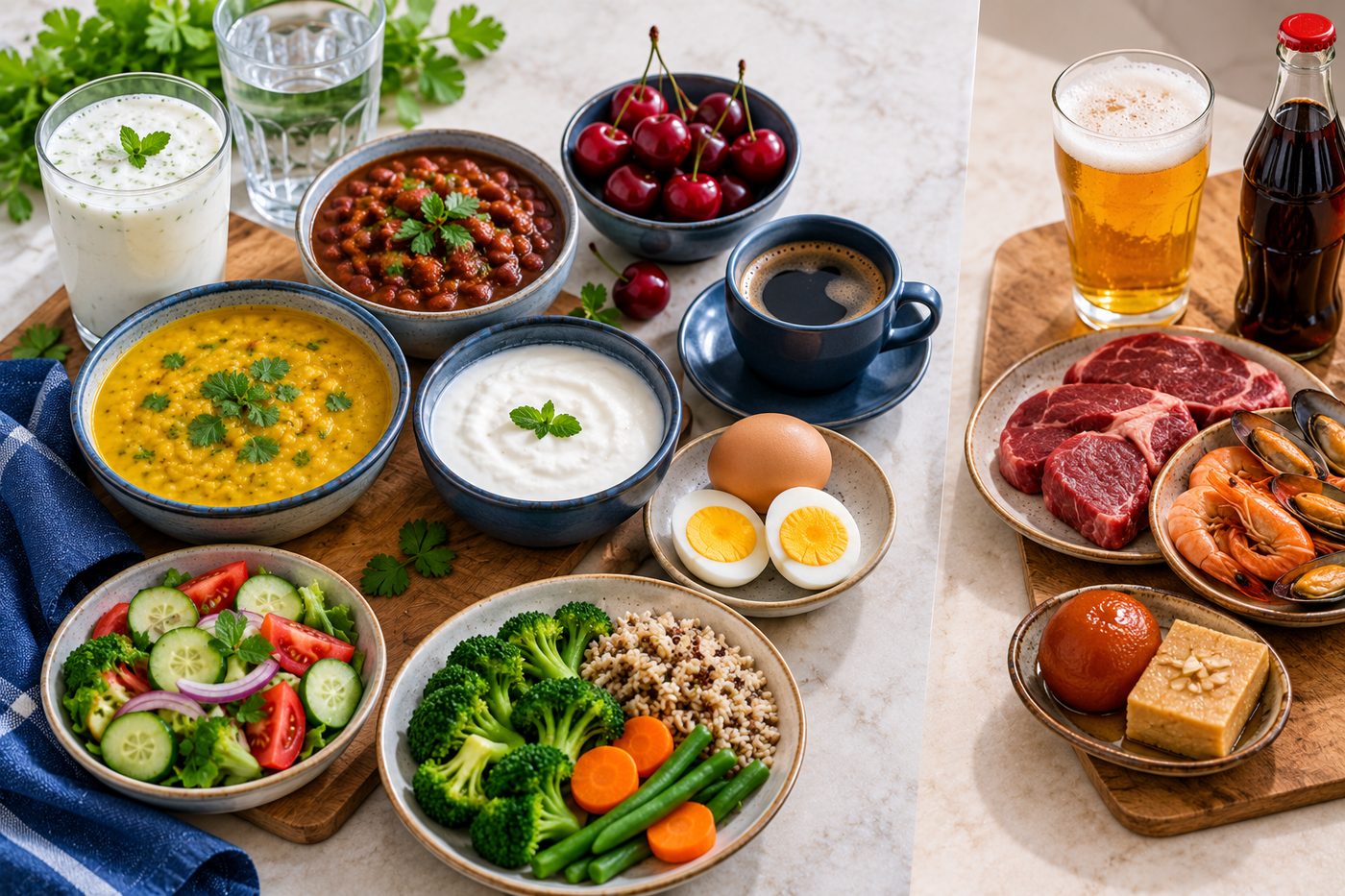

No diet cures inflammatory arthritis, and no diet replaces medicine. But what you eat does affect inflammation, weight, uric acid and how well you tolerate treatment — so it's worth getting right. These guides are written for the food actually on Indian tables, and they follow the evidence rather than tradition or fashion. Discuss any big change with your rheumatologist, especially if you have diabetes, kidney disease or are on steroids.
First, the fact that changes everything
Diet lowers uric acid by a modest amount — typically around 1 mg/dL even when done well. That's enough to help, and enough to reduce attacks in mild cases. It is not enough on its own for most people who've had repeated attacks — they need uric-acid-lowering medicine, with diet supporting it. Understanding this prevents two mistakes: starving yourself of good food for little gain, and believing you've "failed" because diet alone didn't stop the attacks.
The big Indian myth: dal, rajma and paneer
This one myth does more harm than any other. Vegetarian gout patients in particular are often left with almost nothing to eat. Please eat your dal.
What genuinely raises uric acid
| Limit or avoid | Why |
|---|---|
| Organ meats — liver, kidney, brain (kaleji, gurda) | The richest purine source of all |
| Red meat — mutton, beef | High purine load; strongest meat link to attacks |
| Shellfish — prawns, crab; and sardines, anchovies | High-purine seafood (other fish in moderation is fine) |
| Beer and spirits (whisky, rum, vodka) | Beer is the worst — yeast purines plus alcohol's effect on the kidney. Wine in small amounts is less harmful. |
| Sugary drinks and fructose — cold drinks, packaged juices, sweetened lassi, sweets | The most under-recognised cause. Fructose directly raises uric acid. Cold drinks are as bad for gout as beer. |
| Excess weight | Raises uric acid and lowers the kidney's clearance of it |
| Crash diets and fasting | Rapid breakdown of body tissue floods the blood with uric acid and triggers attacks |
What helps
| Enjoy | Why |
|---|---|
| Curd, milk, buttermilk, paneer (low-fat is fine) | Lower uric acid and reduce attacks |
| Dal, rajma, chana, sprouts, tofu | Safe protein; no gout link despite purines |
| Vegetables and fruit — including spinach, mushrooms, tomatoes | All fine; the old restrictions are unfounded |
| Whole grains, millets | Fibre; help weight control |
| Water — 2.5–3 litres a day unless your doctor limits fluids | Helps the kidneys clear uric acid and lowers stone risk |
| Coffee (regular, in moderation) | Associated with lower uric acid |
| Cherries and vitamin C–rich fruit | Modest reductions in attacks |
| Chicken and fish (not shellfish) in moderation | Fine for most; not the main culprits |
| Eggs | Low in purines — a good protein choice |
During an attack
Rest the joint, drink plenty of water, avoid alcohol and sugary drinks completely, and take the anti-inflammatory treatment your doctor has advised. Don't start or stop uric-acid-lowering medicine during an attack without advice — and don't fast "to cleanse"; it makes attacks worse.
Weight — the quiet cure
Losing weight lowers uric acid, reduces attacks, and is the one dietary change that rivals medicine in its effect. Slow and steady: crash dieting does the opposite. Pair the plate above with walking or cycling once the joint allows.
Common questions
Can I eat dal and rajma if I have gout?+
Is curd bad for uric acid?+
Are tomatoes bad for gout?+
What drinks should I avoid with gout?+
Can diet alone control my gout?+
Is chicken allowed in gout?+
Repeated gout attacks despite watching your diet?
That usually means medicine is needed alongside diet — and it works. Walk-in consultations, no appointment.
Clinic timings & location