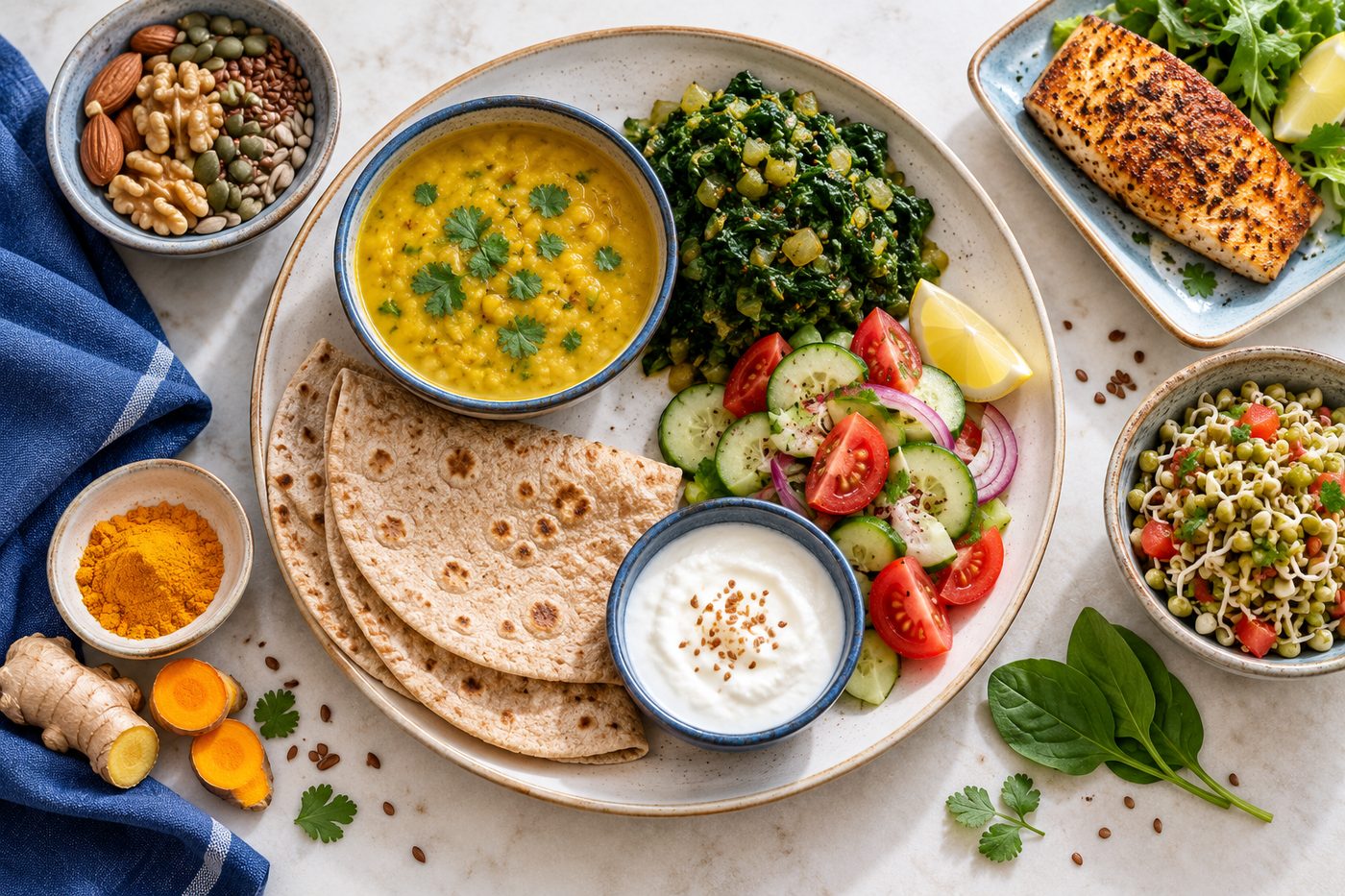

No diet cures inflammatory arthritis, and no diet replaces medicine. But what you eat does affect inflammation, weight, uric acid and how well you tolerate treatment — so it's worth getting right. These guides are written for the food actually on Indian tables, and they follow the evidence rather than tradition or fashion. Discuss any big change with your rheumatologist, especially if you have diabetes, kidney disease or are on steroids.
What diet can and can't do
Let's be precise, because vagueness is where myths grow. For inflammatory arthritis (rheumatoid, psoriatic, ankylosing spondylitis, lupus), diet cannot switch the disease off — the immune system is the driver, and medicine is what controls it. What a good diet can do is modestly lower background inflammation, help your medicines work in a healthier body, protect your heart (these conditions raise heart risk), and keep your weight where your joints want it.
For gout and osteoarthritis, diet and weight matter a great deal more — enough to change the course of the condition. And for everyone, eating badly makes fatigue, pain and recovery worse.
The eating pattern with the best evidence
The most-studied approach for inflammatory arthritis is the Mediterranean-style pattern: plenty of vegetables, fruit, legumes, whole grains, nuts and seeds; olive-type oils; fish; modest dairy; little red meat, sugar or processed food. Studies in rheumatoid arthritis show modest but real reductions in pain and inflammation markers. The good news for Indian kitchens: this pattern maps almost perfectly onto a traditional home-cooked Indian plate.
| Eat more of | Why |
|---|---|
| Dal, rajma, chana, sprouts | Plant protein and fibre — anti-inflammatory, filling, and (contrary to myth) fine in gout |
| Vegetables, especially leafy greens, and fruit | Fibre, antioxidants, vitamins — aim for half the plate |
| Whole grains: atta roti, brown rice, millets (bajra, jowar, ragi), oats | Steady energy; fibre feeds a healthier gut, which is linked to lower inflammation |
| Curd, buttermilk, paneer in moderation | Protein and calcium; dairy is protective in gout and important for bones on steroids |
| Nuts and seeds: walnuts, almonds, flaxseed, chia | Healthy fats and omega-3 (flax, walnuts, chia) |
| Fish (if you eat it) — 2 servings a week | The best dietary source of anti-inflammatory omega-3 |
| Mustard, olive, groundnut or rice-bran oil — in moderation | Better fats than repeatedly-heated or hydrogenated oils |
| Spices: turmeric, ginger, garlic, cinnamon | Mild anti-inflammatory properties — as food, not as a cure |
What to cut back
- Sugar and sugary drinks — cold drinks, packaged juices, sweets. Sugar drives inflammation and weight, and fructose raises uric acid.
- Refined flour (maida) — white bread, bakery items, most biscuits and packaged snacks.
- Deep-fried and repeatedly-fried food — samosas, pakoras, chips, and anything cooked in reused oil.
- Ultra-processed food — instant noodles, chips, packaged namkeen, processed meats.
- Excess red meat — mutton, and organ meats in particular (important in gout).
- Alcohol — raises uric acid (beer and spirits especially), strains the liver alongside methotrexate, and worsens inflammation. Less is better; in gout, ideally none.
Weight: the most powerful 'diet' change of all
Every extra kilo puts roughly four extra kilos of load through your knees with each step. Weight loss is the single most effective non-drug treatment for knee osteoarthritis, substantially lowers uric acid and attack frequency in gout, improves response to treatment in psoriatic arthritis, and reduces inflammation generally. Even 5–10% of body weight makes a measurable difference. The route is the same plate described above, smaller portions, and movement your joints can tolerate — walking, cycling, swimming. Crash diets and fasting are not the answer; they lose muscle, not fat, and can trigger gout attacks.
Vitamins and supplements — briefly
Two matter for most patients: vitamin D (deficiency is very common in India despite the sun, and it's checked and replaced if low) and calcium (especially on steroids, for bone protection). Omega-3 fish oil has modest evidence in rheumatoid arthritis. Beyond these, most supplements have weak or no evidence — the details are on the supplements page.
Food and your medicines
Alcohol with methotrexate, calcium with steroids, folic acid, salt and sugar on steroids, and a few real interactions — covered on the eating well on your medicines page.
Common questions
Can diet cure rheumatoid arthritis?+
Is there a specific 'arthritis diet'?+
Should I go vegetarian for arthritis?+
Does fasting help arthritis?+
Is gluten-free or keto good for arthritis?+
Want a diet plan that fits your condition and your medicines?
Bring your reports and we'll talk through what actually helps in your case. Walk-in, no appointment.
Clinic timings & location