Sjögren's Syndrome
An autoimmune condition that attacks the moisture-producing glands — causing persistently dry eyes and mouth, often with fatigue and joint pain. Frequently overlooked, but very manageable once recognised.
What is Sjögren's syndrome?
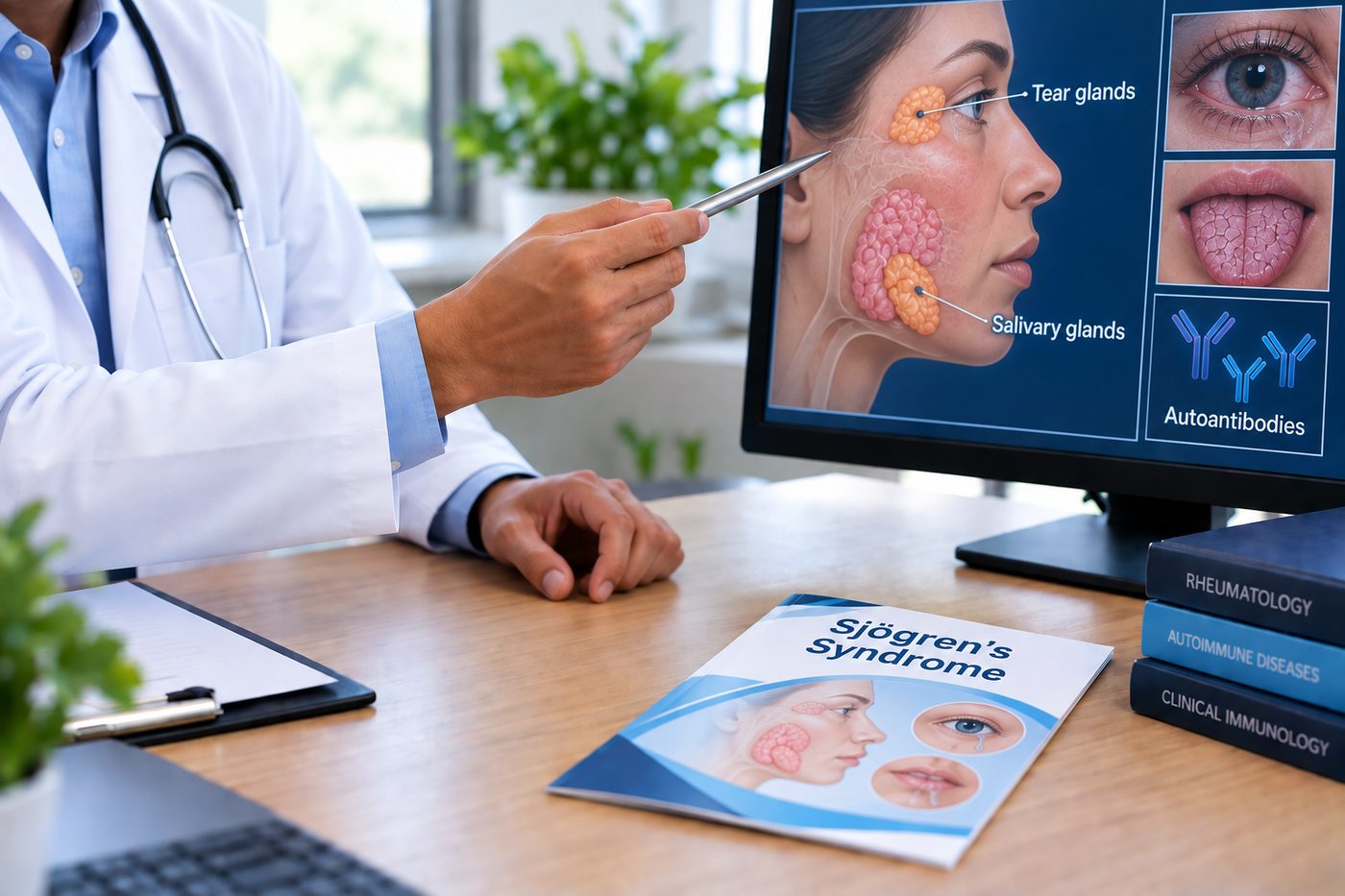
Sjögren's syndrome is an autoimmune condition in which the immune system attacks the glands that produce moisture — most noticeably the tear and saliva glands. The result is persistently dry eyes and a dry mouth, often with fatigue and joint pain. It can occur on its own or alongside another condition such as rheumatoid arthritis or lupus.
It is far more common in women, usually appears in middle age, and is frequently overlooked because dryness is easy to dismiss.
Symptoms to recognise
- Dry, gritty or burning eyes, often worse by evening or in wind and air-conditioning
- Dry mouth — difficulty swallowing dry food, needing water to talk, more dental decay
- Persistent fatigue and aching joints
- Swelling of the glands at the side of the face or under the jaw
- Dry skin, dry cough, or vaginal dryness
- Occasionally, effects on the nerves, lungs, kidneys or blood
What causes it?
The immune system mistakenly targets the moisture-producing glands, causing inflammation that reduces their output. Genetic tendency plays a role, and it may be triggered by an infection or hormonal factors. It is not caused by anything a person did, and it is not contagious.
When should you see a rheumatologist?
See a rheumatologist if you have persistent dry eyes and mouth together with fatigue or joint pain, if you have another autoimmune condition and develop dryness, or if a blood test has shown autoimmune antibodies. Proper diagnosis matters because Sjögren's can affect organs beyond the glands, and monitoring prevents complications.
How it is diagnosed
- Symptom assessment — the pattern and duration of dryness and systemic symptoms
- Blood tests — including antibodies (such as anti-Ro/SSA and anti-La/SSB), ANA, and inflammation markers
- Eye and saliva tests — measuring tear and saliva production
- Occasionally a small lip gland biopsy where the picture is unclear
How it is treated
Treatment relieves symptoms and controls the underlying immune activity:
- Moisture replacement — lubricating eye drops, saliva substitutes, and good dental care
- Medication to stimulate gland output where appropriate
- Hydroxychloroquine or other immune-modulating medicines for fatigue, joint pain and systemic features
- Regular monitoring of the eyes, dental health and any organ involvement
Dry eyes and mouth that won't settle?
Persistent dryness with fatigue or joint aches is worth an autoimmune assessment. Consultations are walk-in, no appointment needed.
Clinic timings & location