Scleroderma
An autoimmune condition causing the skin to thicken and tighten, sometimes affecting internal organs. Often announced years in advance by Raynaud's — cold, colour-changing fingers. Early specialist care protects the organs.
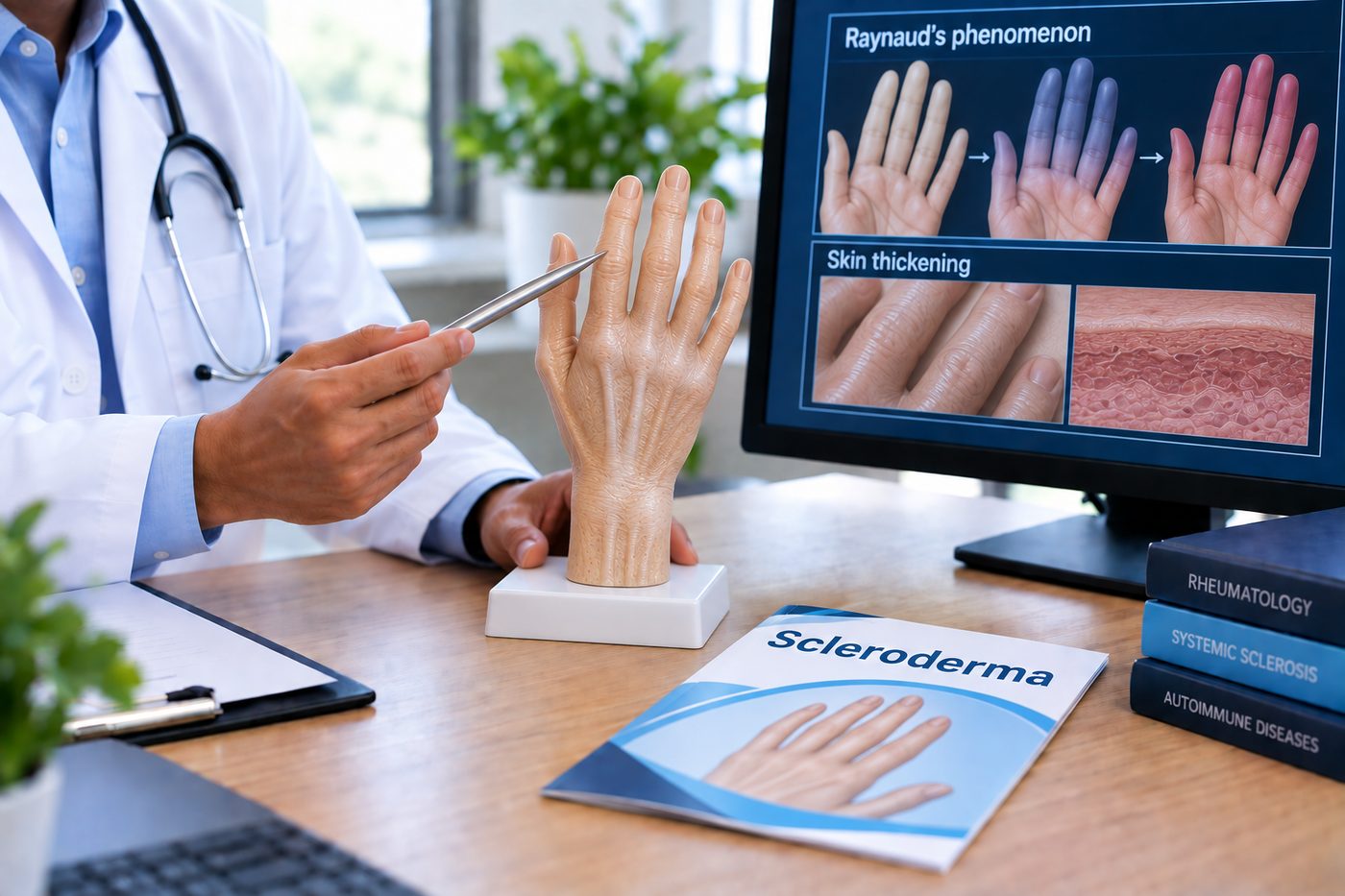
What is scleroderma?
Scleroderma (systemic sclerosis) is an autoimmune condition in which the body produces too much collagen, causing the skin to thicken and tighten. In some forms it also affects internal organs — the lungs, digestive system, kidneys and heart — and the small blood vessels. It ranges from a limited form affecting mainly the skin of the hands and face to a more widespread form that needs closer monitoring.
It is uncommon, affects women more often, and benefits greatly from early specialist care that protects the organs.
Symptoms to recognise
- Raynaud's phenomenon — fingers turning white, then blue, then red in the cold or with stress; often the first sign, sometimes years before anything else
- Skin thickening or tightening, especially of the fingers, hands and face; puffy fingers early on
- Small sores on the fingertips that are slow to heal
- Heartburn, difficulty swallowing, or bloating
- Breathlessness or a dry cough
- Joint stiffness and fatigue
What causes it?
The immune system triggers overproduction of collagen and damage to small blood vessels. The exact cause is unknown, though genetic tendency and environmental exposures play a role. It is not contagious and is not caused by anything a person did.
When should you see a rheumatologist?
See a rheumatologist if you develop Raynaud's together with finger swelling, skin tightening, or fingertip sores — or if a blood test has shown scleroderma-related antibodies. Early assessment allows monitoring of the lungs and other organs, where timely treatment prevents serious problems.
How it is diagnosed
- Clinical examination — the pattern and extent of skin changes and Raynaud's
- Blood tests — ANA and specific antibodies (such as anti-centromere or anti-Scl-70)
- Nailfold capillaroscopy — examining the tiny blood vessels at the base of the nails
- Organ assessment — lung function tests, echocardiogram and other scans to check for internal involvement
How it is treated
Treatment is tailored to which parts of the body are involved:
- Raynaud's management — keeping warm, and medicines that improve blood flow to the fingers
- Treatment for skin, joint and digestive symptoms
- Immune-modulating or targeted therapies to slow skin and organ involvement where needed
- Regular monitoring of the lungs, heart, kidneys and blood pressure
Careful, ongoing specialist care substantially improves the long-term outlook.
Cold, colour-changing fingers with tightening skin?
That combination should always be assessed early. Consultations are walk-in, no appointment needed.
Clinic timings & location