Vasculitis
Inflammation of the blood vessels that can affect almost any part of the body — from the skin and joints to the kidneys, lungs and nerves. Early recognition and treatment protect the organs.
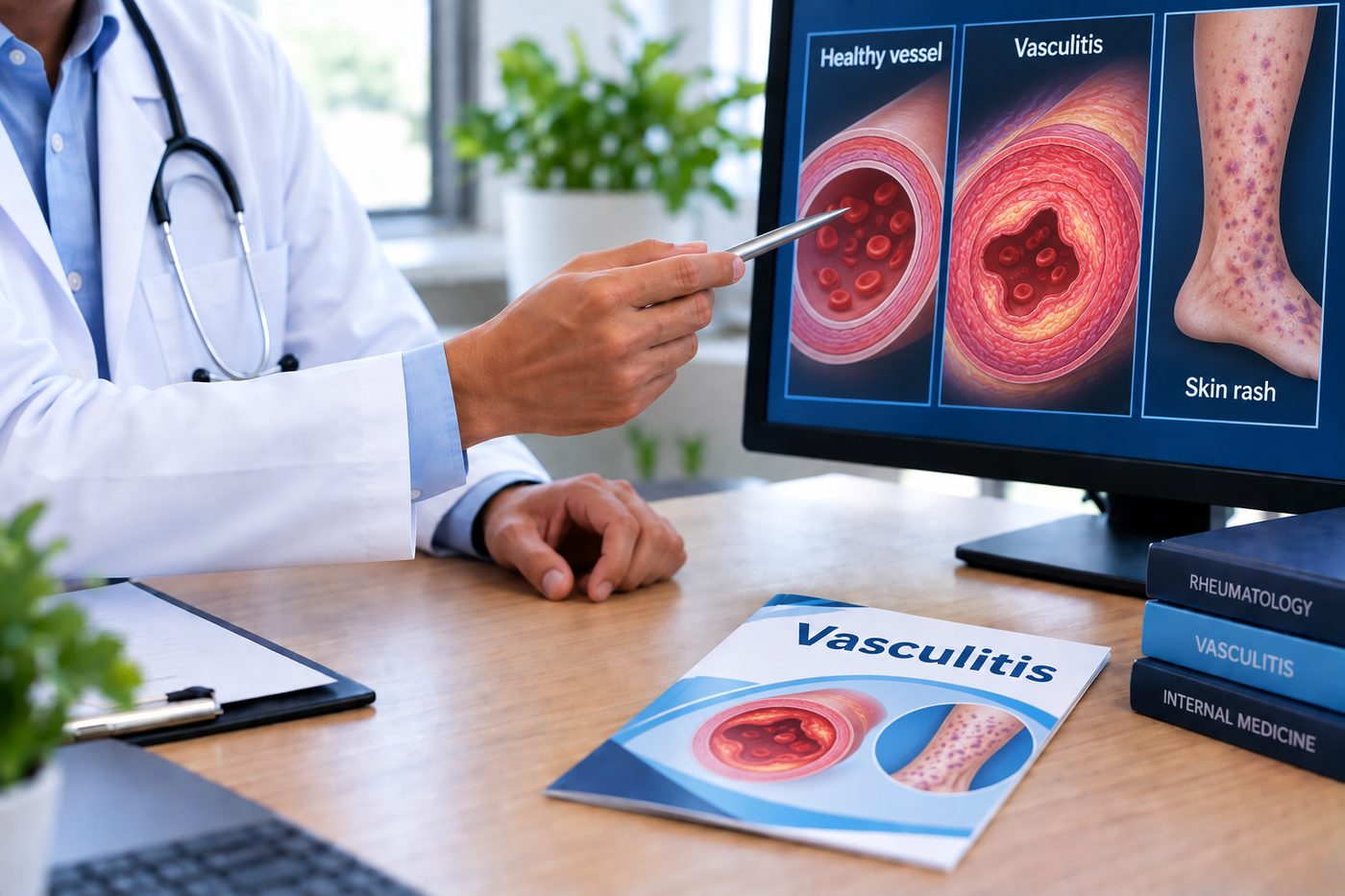
What is vasculitis?
Vasculitis means inflammation of the blood vessels. When vessel walls become inflamed, they can narrow, weaken or block, reducing blood flow to the tissues they supply. Because blood vessels run everywhere, vasculitis can affect almost any part of the body — the skin, joints, kidneys, lungs, nerves, eyes or blood vessels of the head.
There are many types, ranging from mild and self-limiting to serious conditions that need prompt treatment. Early recognition matters because timely treatment protects the organs.
Symptoms to recognise
Vasculitis often presents with a combination of general and organ-specific symptoms:
- Fever, fatigue, weight loss and general unwellness with no clear cause
- A rash of small red or purple spots, often on the legs
- Joint and muscle pain
- Numbness, tingling or weakness in the hands or feet
- New, severe headache with scalp tenderness or jaw pain when chewing, especially over 50
- Sinus or nose problems, cough or breathlessness, blood in the urine
What causes it?
In most cases the immune system attacks the blood vessel walls, though the trigger is often unknown. Some vasculitis is linked to infections, certain medications, or other autoimmune conditions such as rheumatoid arthritis or lupus. It is not contagious.
When should you see a rheumatologist?
See a rheumatologist if you have unexplained fever and weight loss with a rash, nerve symptoms, or joint pain — or if your doctor suspects vasculitis on the basis of blood or urine tests. Rheumatologists specialise in diagnosing and treating vasculitis, and coordinating care with other specialists when organs are involved.
How it is diagnosed
Diagnosis depends on the type and the organs involved:
- Blood and urine tests — inflammation markers, specific antibodies (such as ANCA), kidney function
- Imaging — scans of the affected vessels or organs where needed
- Biopsy — a small tissue sample from the skin or affected organ is often the definitive test
How it is treated
Treatment calms the inflammation and protects the organs:
- Corticosteroids to bring inflammation under control quickly
- Immune-suppressing or targeted therapies to maintain control and allow steroids to be reduced
- Treatment of any underlying cause such as infection or medication
- Close monitoring to detect and manage flares early
With modern treatment, most types of vasculitis can be brought into remission and managed over the long term.
Unexplained fever, rash or nerve symptoms?
These can be signs of vasculitis, which responds well to prompt specialist treatment. Consultations are walk-in, no appointment needed.
Clinic timings & location