Gout
A common and highly treatable form of arthritis caused by uric acid crystals in the joints — bringing sudden, severe attacks of pain, redness and swelling. With the right treatment, attacks can be stopped for good.
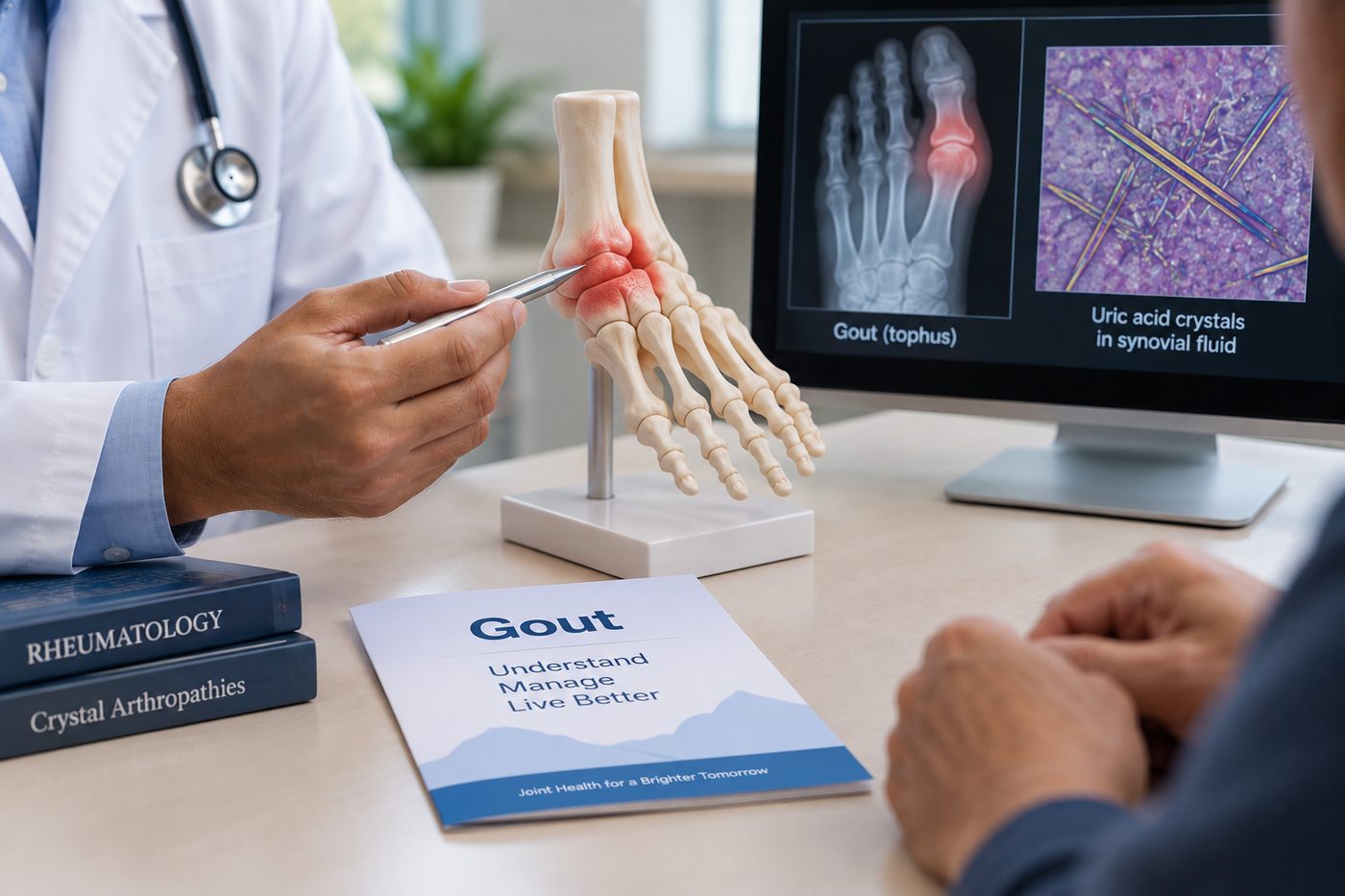
What is gout?
Gout is a form of arthritis caused by tiny crystals of uric acid forming inside a joint. When uric acid levels in the blood stay high over time, these needle-sharp crystals can trigger sudden, intense attacks of pain, redness and swelling. Gout is very common, very treatable, and — importantly — curable in the sense that attacks can be stopped from ever coming back.
Symptoms to recognise
A gout attack is usually unmistakable once you've had one:
- Sudden, severe pain in a single joint — classically the base of the big toe — often beginning at night
- The joint becomes red, hot, swollen and so tender that even a bedsheet is unbearable
- Attacks reach peak intensity within hours and settle over several days
- Other joints can be affected too — ankles, knees, wrists and fingers
- Over time, untreated gout can cause lumps (tophi) and more frequent attacks
What causes it?
Gout results from persistently high uric acid, which can be due to genetics, diet, being overweight, certain medications, kidney function, and alcohol — especially beer and spirits. It often runs in families. It is a common misconception that gout is simply caused by rich food; while diet plays a part, the tendency is largely inherited, and effective treatment addresses the uric acid level itself.
When should you see a rheumatologist?
See a specialist if you have recurring joint attacks, if a first attack is severe, if you develop lumps around joints, or if uric-acid-lowering treatment hasn't controlled your gout. A rheumatologist can confirm the diagnosis, rule out other causes of a hot swollen joint, and set up a plan that stops attacks permanently rather than just treating them one at a time.
How it is diagnosed
Gout is diagnosed through:
- The clinical picture — the classic pattern of a sudden, hot, intensely painful joint
- Blood tests — measuring uric acid (though it can be normal during an attack) and kidney function
- Joint fluid analysis — examining fluid from the joint under a microscope for crystals, the definitive test where needed
- Ultrasound — which can detect uric acid deposits in and around joints
How it is treated
Gout care has two parts — settling the attack, and preventing future ones:
- For an acute attack — anti-inflammatory medication to settle pain and swelling quickly
- For prevention — uric-acid-lowering therapy (such as allopurinol or febuxostat), taken long-term and adjusted to a target level, which dissolves crystals and stops attacks
- Lifestyle measures — sensible changes to weight, alcohol and diet that support, but don't replace, medication
- Monitoring — periodic uric acid checks to confirm the target is reached
Done properly, gout treatment is one of the most successful in all of medicine — attacks can be eliminated entirely.
Recurring joint attacks or high uric acid?
Gout can be stopped from coming back — the key is treating the cause, not just the attack. Consultations are walk-in, no appointment needed.
Clinic timings & location