Ankylosing Spondylitis
A form of inflammatory arthritis affecting the spine and pelvis, causing back pain and stiffness that is worst at rest and eases with movement. With early diagnosis and treatment, most people stay mobile and active.
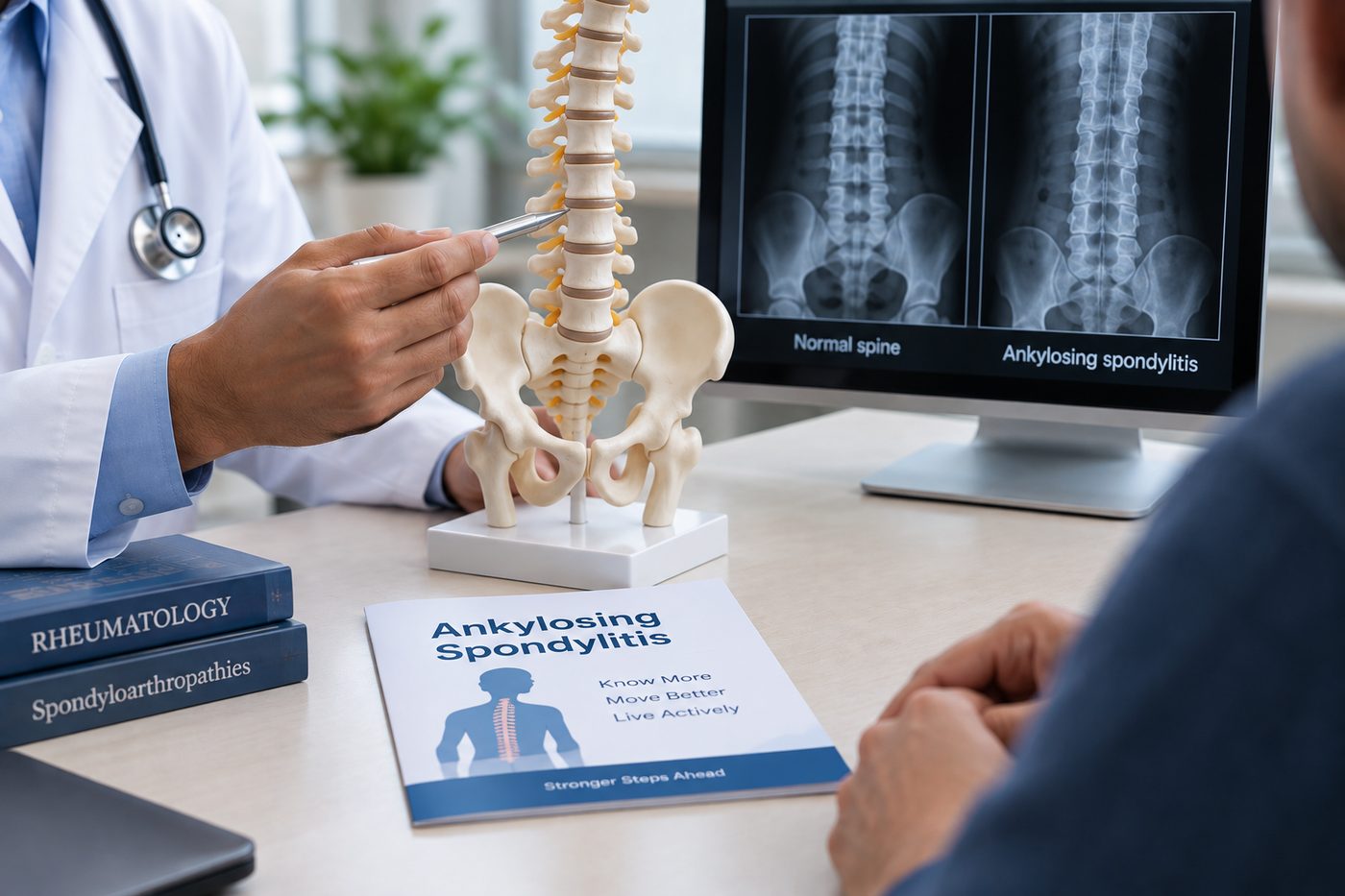
What is ankylosing spondylitis?
Ankylosing spondylitis (AS) is a form of inflammatory arthritis that mainly affects the spine and the joints where the lower spine meets the pelvis (the sacroiliac joints). It is part of a group of conditions called axial spondyloarthritis. The inflammation causes pain and stiffness and, over years, can lead to some of the spinal bones fusing together if not managed well.
AS typically begins in late teens and early adulthood, more often in men, and tends to run in families. The good news is that with early diagnosis and modern treatment, most people stay mobile and active.
Symptoms to recognise
The hallmark of AS is a very particular kind of back pain — different from ordinary mechanical back pain:
- Slow-onset lower back and buttock pain, usually before age 40
- Pain and stiffness that are worse with rest and in the early morning, and improve with movement and exercise
- Waking in the second half of the night because of back pain
- Stiffness that can last more than 30 minutes after waking
- Sometimes pain in the heels, chest wall, hips or shoulders; occasionally a painful red eye (iritis)
What causes it?
AS is driven by the immune system causing inflammation at the sites where ligaments and tendons attach to bone, especially in the spine. A gene called HLA-B27 is found in most people with AS, though carrying it does not mean a person will definitely develop the condition. A family history of AS or related conditions increases the likelihood.
When should you see a rheumatologist?
See a rheumatologist if you have back pain lasting more than three months that began before age 45, especially if it improves with movement, wakes you at night, or comes with prolonged morning stiffness. AS is frequently mistaken for ordinary back pain or a disc problem for years — early specialist assessment is the single biggest factor in preventing long-term stiffness.
How it is diagnosed
Diagnosis combines your symptom pattern with examination, imaging and blood tests:
- Clinical assessment — the pattern of pain, spinal movement and where it hurts
- Imaging — X-rays and, importantly, MRI of the sacroiliac joints, which can detect inflammation early before X-ray changes appear
- Blood tests — HLA-B27, and inflammation markers (ESR, CRP)
How it is treated
Treatment keeps the spine mobile, controls inflammation and prevents long-term damage:
- Regular exercise and physiotherapy — the foundation of AS care; keeping the spine moving is genuinely treatment, not just advice
- Anti-inflammatory medication (NSAIDs) — effective for many people in controlling pain and stiffness
- Biologic therapies — modern drugs that target the inflammation directly, for those who need more than NSAIDs, with excellent results
- Ongoing monitoring — tracking disease activity and posture over time
Back pain that's worse at rest, not activity?
That pattern is a strong reason to be assessed by a rheumatologist. Consultations are held as a walk-in OPD — no appointment needed.
Clinic timings & location